Why can't you relax at home?
(It's not what you think.)
The reason your home doesn't feel restful has nothing to do with how clean it is.

Maya K., 38, will be the first to tell you she had a candle problem — and she doesn't mean that the way most people do.
"I had dozens of them," she says. "Every shelf, every bathroom ledge, every corner of my living room. I was obsessed with finding the right one."
What she was really looking for, she'd later realise, wasn't a candle at all.
Maya works in healthcare administration in Chicago. Her days are back-to-back — calls that bleed into emails that bleed into the drive home, the grocery run, the dishes, the notifications she'd been ignoring since noon. By the time she finally sat down most evenings, her body was on the couch but her mind was still at her desk. She was, in a word she'd only find later, overstimulated — and no amount of wine or dim lighting was going to fix that on its own.
"I'd light a candle, pour a glass of wine, put on something comfortable. I was doing everything right. But I couldn't actually switch off. I wasn't resting. I was just... waiting to feel tired enough to go to bed."
She assumed this was just what her 30s felt like. She wasn't alone in thinking that.
The problem isn't that you can't relax.
It's that your home hasn't been given the chance to help you.
There's a reason so many women describe their home as a place they manage rather than a place they recover in. The average working woman spends her evenings in the same physical space where she answers late emails, folds laundry, and mentally rehearses tomorrow's to-do list. The home becomes another room in the office. Just with softer lighting.
Most candles — even beautiful, expensive ones — address exactly one thing: the smell. A pleasant scent fills the room, and that's the end of it. The rest of the environment stays exactly the same. Your nervous system stays exactly the same.
Here's what the fragrance industry has known for decades but has never had much commercial incentive to explain: most scented candles are not designed around how a room should feel. They're designed around how a candle should smell — in a jar, on a shelf, at the moment of first impression, where the decision to buy is made.
That's why so many candles are over-fragranced. A strong cold throw is what sells in the aisle. What happens when the candle is actually burning, in an actual room, over an actual evening, is a secondary concern. The result is a market full of candles that either announce themselves too loudly — or disappoint completely, their scent evaporating within twenty minutes.
What women are actually trying to buy — and what the industry almost never sells them — is an atmosphere. The sensation of walking into a room and exhaling. Of the day's noise softening, the shoulders dropping, the mind finally letting go.
"I kept thinking the right candle was out there. I just hadn't found it. And I'd started to wonder if maybe I never would."
What the science says — and why it changes everything
Scent is the only one of the five senses with a direct pathway to the limbic system — the part of the brain that controls emotion, memory, and the stress response. Every other sense passes through a relay station first. Scent doesn't.
This means what a room smells like doesn't just influence how it smells. It influences how the room feels on a neurological level — bypassing conscious thought entirely. The right fragrance, in the right balance, can measurably shift your physiological state. Not metaphorically. Measurably.
Researchers at the University of Vienna confirmed that certain fragrance compounds — particularly warm, resinous, and gently grounding profiles — have direct effects on the parasympathetic nervous system: the system responsible for the "rest and digest" state that is the physiological opposite of stress.
The critical variable isn't scent intensity. It's scent balance. An overpowering fragrance actually activates the nervous system. Too loud, and the candle becomes another source of stimulation. Too weak, and the signal never arrives. The room doesn't change.
Which is exactly what Maya discovered — entirely by accident.
"I wasn't expecting it to feel that different."
A few months ago, a colleague mentioned she'd been ordering from a small New Hampshire candle brand called Even Hour. The name alone caught Maya's attention. Even Hour. Not a day. Not a morning. An hour — carved out, intentional, yours.
"She described it as the first candle that made her home feel like somewhere she actually wanted to be," Maya recalls. "I thought that was a strange way to describe a candle. But I also thought — I know exactly what she means."
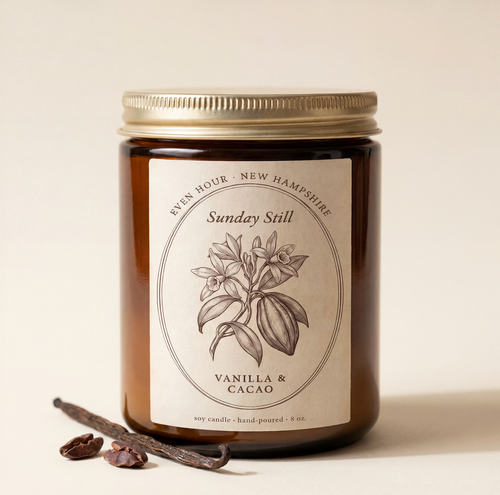
She ordered the scent her colleague had been using: Sunday Still — built around vanilla bean, tonka bean, and whipped cocoa. When it arrived, she almost didn't notice how different the first evening was. She lit it after dinner, the way she always lit candles. She sat down with a book she hadn't opened in two weeks.
Twenty minutes later, she realised she hadn't checked her phone.
"That sounds like nothing. But for me, that's everything. I'm usually checking it every few minutes. That evening I just... forgot about it. I finished four chapters. I went to bed before midnight for the first time in months."

Sunday Still — hand-poured in New Hampshire. The candle Maya lit that first evening.
What Even Hour does differently — and why it matters
Even Hour was built around one quietly radical idea: that most candles only change how a room smells — but the right candle can change how a room feels.
Rather than blending fragrance notes for maximum initial impact, Even Hour builds each candle in three distinct layers designed to evolve as the candle burns. The opening note cuts through the noise of the day. The mid note settles you. The base note — the one that lingers long after the flame goes out — is the one that tells your body: we're done now. This part of the day is yours.
Each candle begins with an emotional moment — not a scent concept, but a feeling the room should produce. The brand calls this balanced atmosphere scenting: present enough to change the room, never loud enough to overpower it.
"Most candles treat fragrance like volume. We treat it like temperature. You don't want the heat turned all the way up. You want it exactly right." — Even Hour
Inside Sunday Still — the scent that started it all
Understanding why Sunday Still works means understanding how it's built. Where most vanilla candles front-load sweetness and disappear, Sunday Still layers its warmth across three distinct moments:
"I went back and ordered the others."
Three days after that first evening, Maya had gone looking for the other Even Hour scents herself.
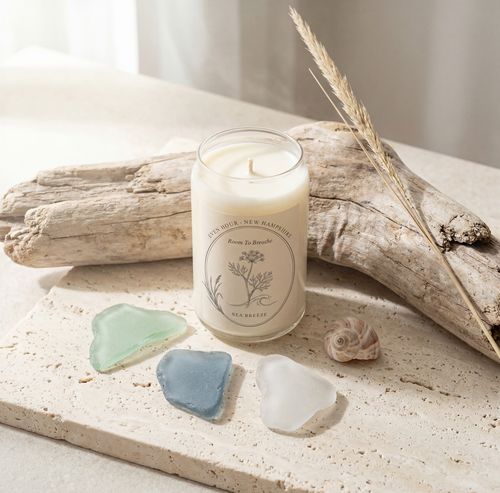
She lit Room to Breathe on a Thursday — the kind of day that leaves a specific residue she describes as "still being at work even when you're not."
"My apartment felt tight. Like the air hadn't moved all day. Within ten minutes of lighting it, something had left — not arrived. All that tightness just softened. The room felt like it could breathe. And then so could I."
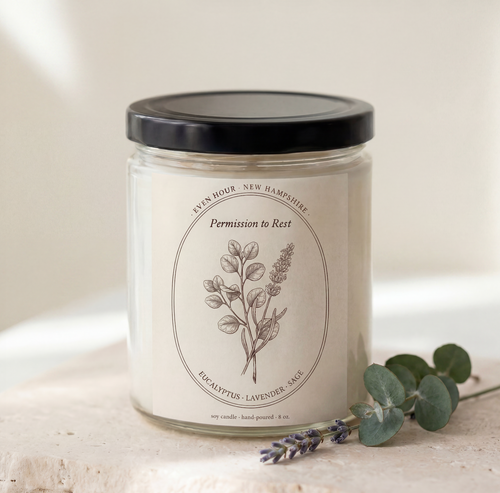
Permission to Rest came a few nights later, on a Sunday when she still felt like she should be doing something.
"It was nine o'clock and I still felt like I should be answering emails. That particular anxiety that makes it feel like relaxing is something you have to earn first. I lit the candle. And the room gave me permission. Like it said: the day is done. And I actually believed it."
The questions most people have before they order
This is the most common concern — particularly with Sunday Still. Vanilla, in the wrong hands, turns cloying. Even Hour anchors the vanilla with tonka and whipped cocoa rather than leaning into the sweetness — producing something that reads as comfort rather than sugar.
"It was the first vanilla candle I'd ever bought where I didn't want to open a window after an hour. Sweet, but grown-up sweet. Like something a person with good taste would choose."
Even Hour candles are formulated for whole-room presence — not in the way of a candle that announces itself when you open the door, but in the way of a room that has been quietly and completely changed by the time you sit down. Maya tested it: she lit Room to Breathe in her living room and sat at her kitchen table at the other end of the apartment.
"I could still smell it. Gently — not overwhelmingly. Just there. Present. Like the room had a signature."
Each Even Hour candle is described in terms of the feeling it produces, not just the notes it contains. Sunday Still isn't just warm vanilla and tonka — it's a slow morning with nowhere to be. Permission to Rest isn't just eucalyptus and lavender — it's the moment you finally stop. You're not choosing between fragrance profiles you can't smell. You're recognising a feeling you've been trying to get back to.
"I knew what Permission to Rest was going to feel like before I ordered it. Because I knew that feeling. I'd been chasing it for months."
You're not comparing it to a cheaper candle. You're comparing it to an evening that feels like the one you actually wanted — versus one that doesn't. Even Hour candles burn for 50–80 hours from 100% USA-farmed soy wax with no synthetic dyes, no phthalates, no petroleum. At $54, that's under $1.10 per hour of a room that actually helps you stop. Most people answer the "worth it" question after the first burn.
"I stopped searching after this."
Maya now keeps all three scents rotating through her home. Sunday Still for slow evenings and the weekends she actually manages to protect. Permission to Rest for the nights the day followed her home and won't let go. Room to Breathe for Sunday mornings with coffee, when the whole week still feels like possibility.
"I don't think about it as buying candles anymore. I think about it as buying the version of the evening I actually want. It sounds small. But it isn't small. It's the thing I come home for."
She paused. Then: "I mentioned it to three friends this month. One of them texted me at ten o'clock on a Friday night: I just lit Sunday Still and I'm not moving from this couch for the rest of the evening. Which is exactly the right response."
Two of the other three have since ordered the Full Collection as housewarming gifts. "It's the easiest gift I've ever recommended," she says. "It arrives beautifully, it works for anyone, and it doesn't feel like a generic candle. It feels like you actually thought about it."
Build your candle wardrobe.
One evening at a time.
One scent rarely covers every room, every mood, and every evening.
Each bundle is built so you always have the right one lit.


